
Developed by a Senior Executive and Operational Excellence Coach with experience at organizations including NOKIA, MICROVENTION, and MAGELLAN, this presentation provides a step-by-step approach to implementing Lean Kanban Systems.
Editor Summary
Lean - Kanban Scheduling Systems is a 105-slide PowerPoint training presentation developed by Operational Excellence Consulting LLC and a Senior Executive/Operational Excellence Coach with experience at NOKIA, MICROVENTION, and MAGELLAN, providing a step-by-step approach to implementing Lean and Kanban.
Read moreCovers Lean principles, the 7 wastes, Kanban size calculations, single-card and dual-card Kanban, Kaizen events, metrics tracking templates, and Kanban card templates. Targeted at operations managers, lean practitioners, project managers, continuous improvement teams, and consultants; sold as a digital download on Flevy with immediate digital download.
Use this deck when an organization is initiating Lean transformations, establishing pull/Kanban systems, running Kaizen events, or training teams on waste reduction and flow creation. Typical users include:
Operations managers establishing WIP limits and optimizing workflow using Kanban size calculations;
Lean practitioners designing single-card and dual-card Kanban and creating Kanban cards;
Project managers planning and running Kaizen events and documenting outcomes;
Continuous improvement teams mapping value streams and tracking Lead Time and Cycle Time.
The slide sequence and step-by-step Kanban implementation process reflect standard Lean consulting practice by combining Kaizen events with metrics-driven implementation.
A Lean Kanban System is a scheduling system that helps determine what to produce, when to produce it, and how much to produce. Kanban scheduling systems are useful when
• lot sizes differ between process steps,
• process cycle times are unbalanced, or
• when distance introduces time lag or variability.
Some of the key benefits of Lean Kanban Scheduling Systems include
• over-production (waste) will be at a minimum
• work in process between processes is always maintained and managed
• less finished goods inventory is required
• quicker quality feedback loop
• workplace is better organized, more comfortable, and safer
Our Lean – Kanban Scheduling Systems Training Module includes:
1. MS PowerPoint Presentation including 105 slides covering
• Introduction to Lean Management,
• Benefits of Lean Kanban Systems,
• Kanban Size Calculations,
• Types of Kanban Systems (Single-Card Kanban – Dual-Card Kanban – In-Process Kanban),
• Kaizen Events, and
• A Step-by-Step Kanban Implementation Process.
"After you have downloaded the training material, you can change any part of the training material and remove all logos and references to Operational Excellence Consulting. You can share the material with your colleagues and clients, and re-use it as you need. The only restriction is that you cannot publicly re-distribute, sell, rent or license the material as though it is your own. Thank you."
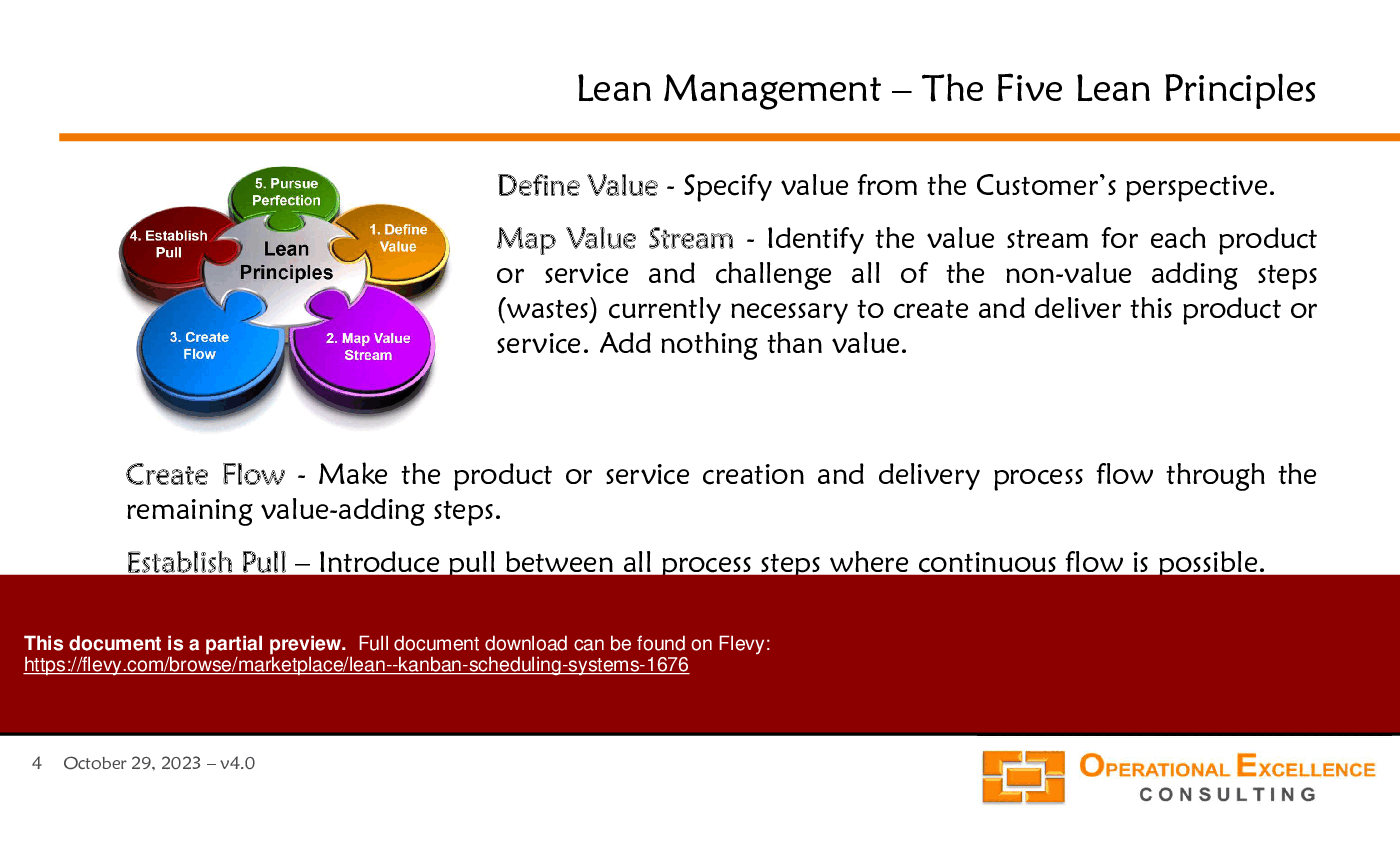
This comprehensive training module also delves into the critical Lean principles, such as defining value, mapping value streams, and establishing pull systems. It highlights the importance of reducing process lead time and identifies the seven wastes that hinder efficiency. The PPT provides practical insights into single-card and dual-card Kanban systems, along with step-by-step implementation guidelines. Real-world success stories illustrate the transformative impact of Lean Kanban systems on productivity and inventory management. This resource is essential for any organization aiming to streamline operations and enhance value delivery.
Got a question about the product? Email us at support@flevy.com or ask the author directly by using the "Ask the Author a Question" form. If you cannot view the preview above this document description, go here to view the large preview instead.
MARCUS OVERVIEW
This synopsis was written by Marcus [?] based on the analysis of the full 105-slide presentation.
Executive Summary
This presentation on Lean Kanban Scheduling Systems offers a structured approach to implementing Lean principles and Kanban methodologies in various operational settings. Developed by an experienced Operational Excellence Coach, the material provides insights into the Lean management framework, emphasizing waste reduction and efficiency improvement. Users will learn to apply Kanban systems effectively, enhancing workflow and productivity while minimizing waste. This resource is essential for organizations aiming to streamline processes and achieve continuous improvement through practical, actionable strategies.
Who This Is For and When to Use
• Operations Managers seeking to optimize workflow and reduce waste
• Lean Practitioners implementing Lean methodologies in their organizations
• Project Managers overseeing process improvement initiatives
• Teams involved in continuous improvement and Kaizen events
• Consultants advising clients on Lean practices and Kanban systems
Best-fit moments to use this deck:
• During Lean transformation initiatives to establish Kanban systems
• In training sessions focused on Lean principles and waste reduction
• When conducting Kaizen events aimed at process improvement
• For workshops on implementing pull systems within various workflows
Learning Objectives
• Define Lean principles and their application in operational contexts
• Identify and eliminate the 7 types of waste in processes
• Create flow and establish pull within operational workflows
• Implement various Kanban systems, including single and dual-card Kanban
• Conduct Kaizen events to drive continuous improvement
• Measure and analyze performance indicators related to Lean practices
Table of Contents
• Introduction to Lean Management & The 7 Types of Wastes (page 1)
• Lean Metrics & Performance Indicators (page 22)
• Create Flow & Establish Pull (page 30)
• Lean Kanban Systems (page 36)
• Kaizen Events & Step-by-Step Kanban Implementation Process (page 85)
Primary Topics Covered
• Lean Principles - The core principles of Lean management focus on value creation, waste elimination, and continuous improvement.
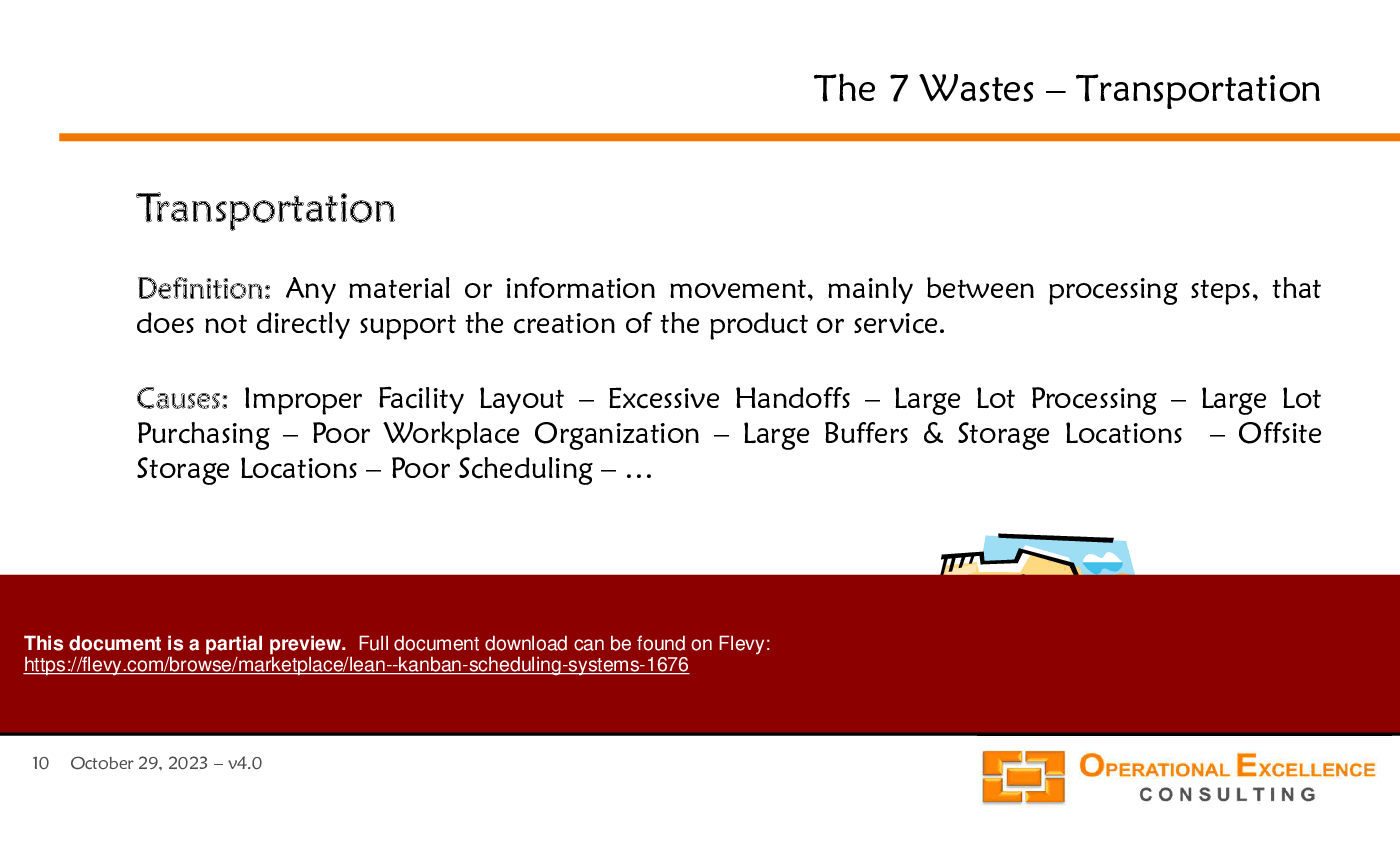
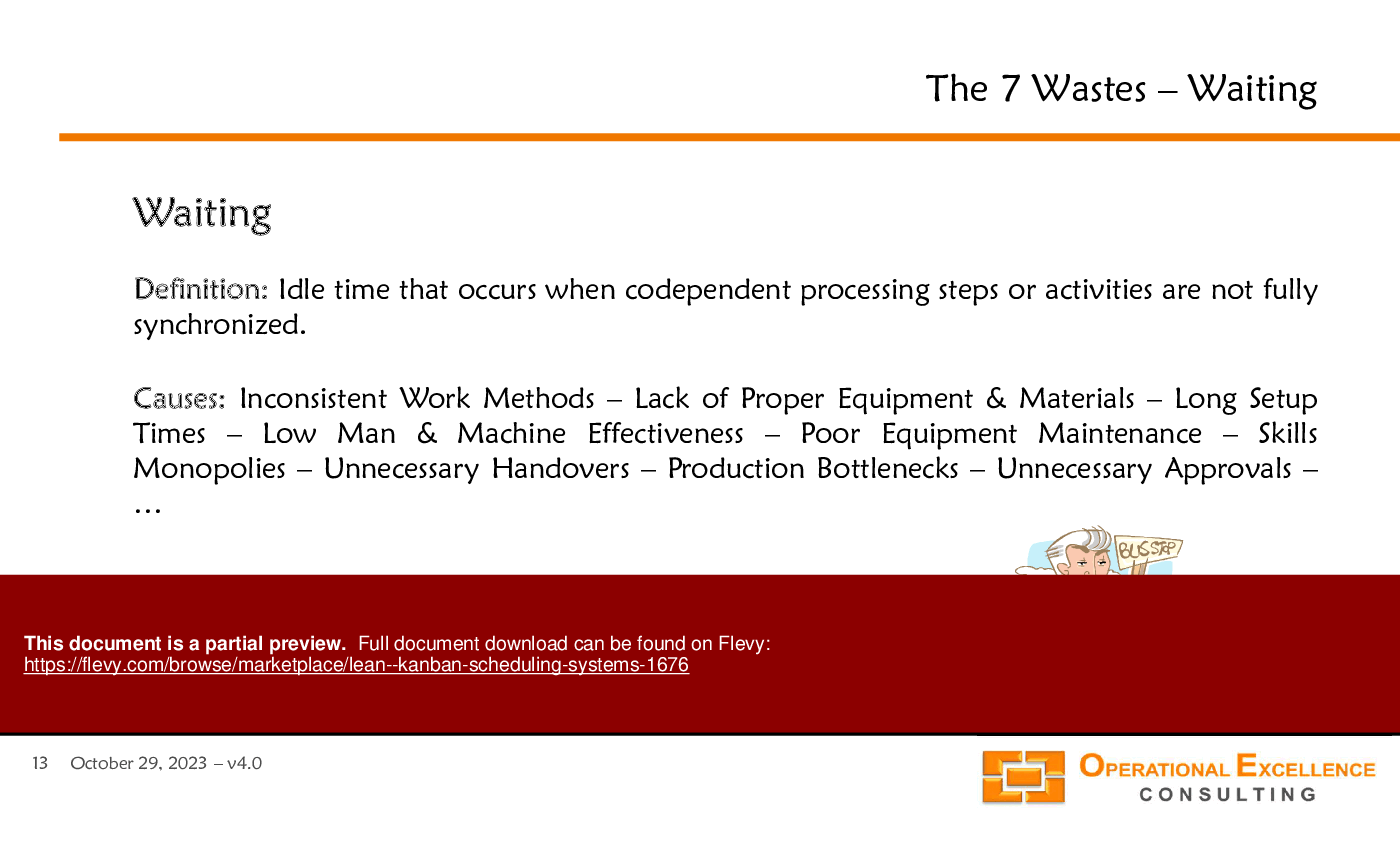
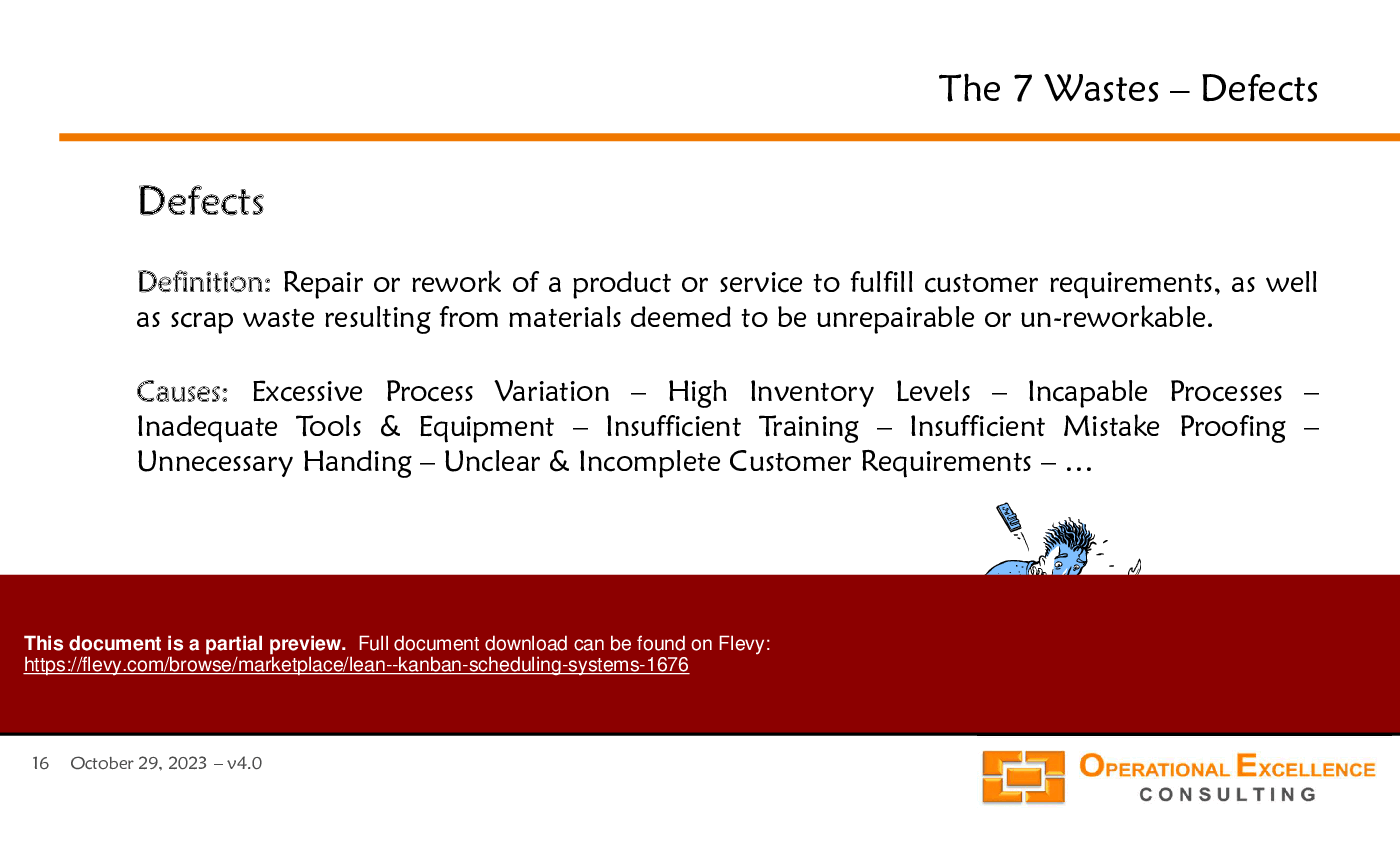
• Seven Types of Waste - Identification of waste types: Inventory, Over-Processing, Waiting, Transportation, Defects, Motion, and Over-Production.
• Kanban Systems - Overview of Kanban as a scheduling system, including single-card and dual-card systems for managing workflow.
• Kaizen Events - Structured approach for continuous improvement through short, focused events aimed at enhancing processes.
• Metrics and Performance Indicators - Key metrics to evaluate Lean performance, including Lead Time, Cycle Time, and Process Efficiency Ratio.
• Implementation Steps - A step-by-step guide on designing and implementing a Kanban system tailored to specific operational needs.
Deliverables, Templates, and Tools
• Kanban card templates for various types of Kanban systems
• Flowcharts illustrating the Kanban process and its components
• Metrics tracking templates for measuring Lean performance
• Guidelines for conducting Kaizen events and documenting outcomes
• Checklists for identifying and eliminating waste in processes
• Visual aids for training sessions on Lean principles and Kanban systems
Slide Highlights
• Overview of Lean principles and their impact on operational efficiency
• Detailed breakdown of the 7 types of waste with examples
• Visual representation of Kanban systems and their functionality
• Step-by-step guide for conducting effective Kaizen events
• Metrics definitions and their relevance to Lean practices
Potential Workshop Agenda
Introduction to Lean Principles (60 minutes)
• Discuss the core concepts of Lean management
• Identify the 7 types of waste in current processes
• Group activity: Analyze case studies
Kanban System Implementation (90 minutes)
• Overview of Kanban systems and their benefits
• Hands-on activity: Create Kanban cards and boards
• Discuss best practices for managing Kanban systems
Kaizen Event Planning (60 minutes)
• Define the purpose and objectives of Kaizen events
• Group exercise: Plan a Kaizen event for a specific process
• Share insights and strategies for successful implementation
Customization Guidance
• Adjust the Kanban card templates to fit specific inventory items and workflows
• Tailor the metrics tracking templates to align with organizational goals
• Modify the Kaizen event framework to address unique operational challenges
• Incorporate company-specific terminology and examples throughout the presentation
Secondary Topics Covered
• Lean metrics and their importance in performance evaluation
• The role of leadership in fostering a Lean culture
• Strategies for employee engagement in Lean initiatives
• Case studies showcasing successful Lean transformations
Topic FAQ
What are the core components of a Lean Kanban scheduling system?
A Lean Kanban scheduling system typically includes visual Kanban cards, pull-based workflow controls, WIP management, flow creation, and continuous improvement practices such as Kaizen events. Performance is monitored using Lean metrics like Lead Time, Cycle Time, and Process Efficiency Ratio.
How do single-card and dual-card Kanban systems differ in practice?
Single-card and dual-card systems are alternative Kanban configurations for signaling production and material movement. Single-card systems use one signal per item; dual-card systems separate signals (for example, production and withdrawal). The Lean - Kanban Scheduling Systems deck explains both types and their use in workflow management.
What inputs are needed to perform Kanban size calculations?
Kanban size calculations require demand and the relevant process timing factors, especially when lot sizes differ, cycle times are unbalanced, or distance introduces time lag. The training material includes guidance on Kanban size calculations to determine card quantities and WIP levels.
What should I look for when buying a Kanban training slide deck for my team?
Look for coverage of Lean fundamentals, the 7 wastes, Kanban size calculations, types of Kanban (single/dual-card), Kaizen event guidance, implementation steps, and practical templates such as Kanban cards and metrics trackers; the presence of those elements across a full training set of slides is important, for example a 105-slide deck.
How much practical value do templates in a Kanban module deliver for operations teams?
Templates accelerate implementation by providing reusable Kanban card formats, flowcharts, metrics trackers, and Kaizen checklists that teams can adapt and apply directly to processes. The module explicitly includes Kanban card templates and metrics tracking templates for operational use.
I need to implement pull systems across work centers with unbalanced cycle times—what first steps should I take?
Start by defining value and mapping the value stream to identify the 7 wastes, then create flow and establish pull. Use Kanban size calculations and the step-by-step Kanban implementation process to determine card quantities and WIP controls, progressing through Kaizen events to iterate improvements.
Can Kanban systems be applied in service industries or non-manufacturing workflows?
Yes; Kanban systems can manage workflows in service industries to improve flow, reduce WIP, and shorten feedback loops. The training material addresses cross-industry application and includes adaptable Kanban card templates to fit service processes.
Which metrics should I track to evaluate Lean Kanban performance?
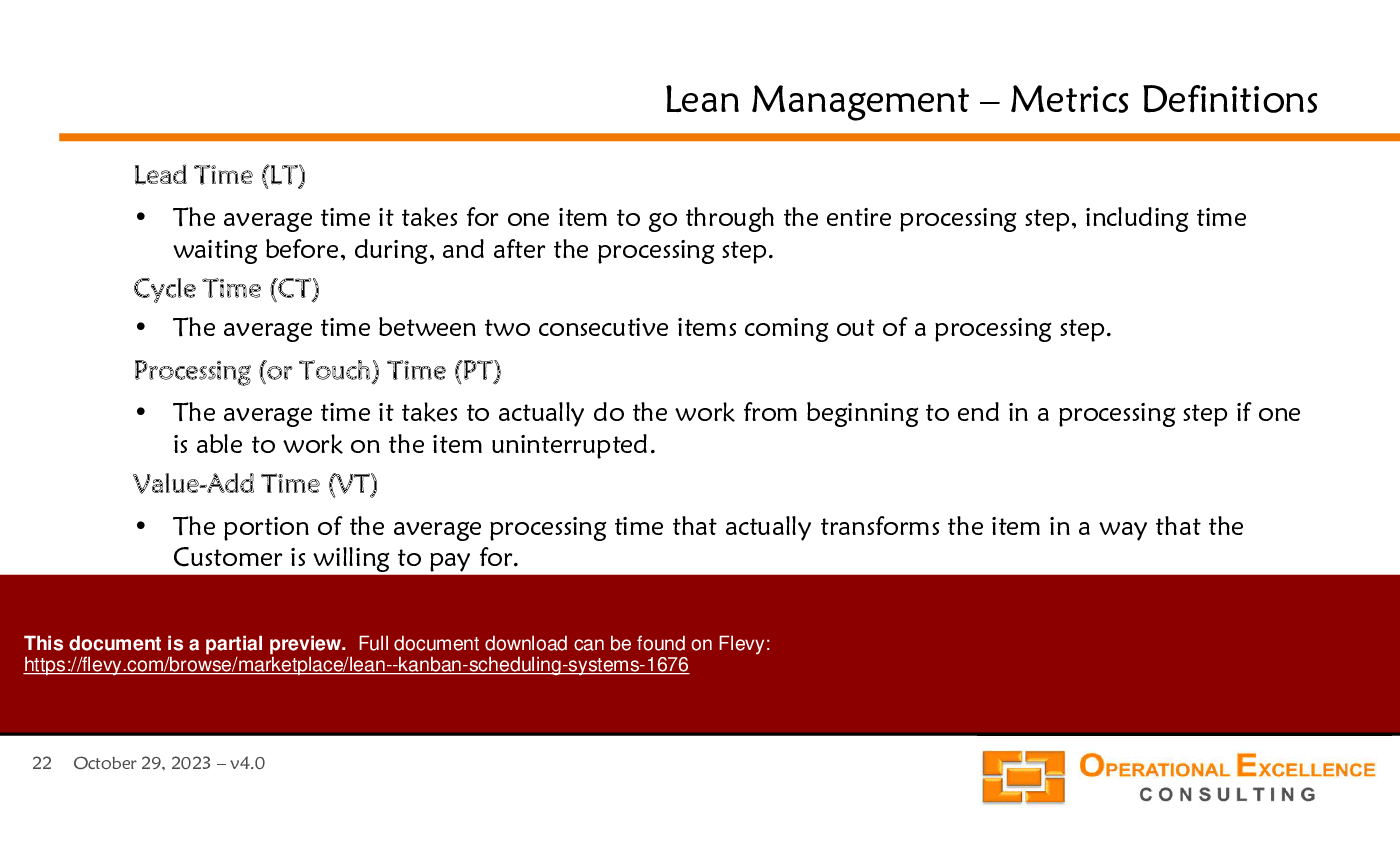
Key metrics for Lean Kanban performance include Lead Time, Cycle Time, and Process Efficiency Ratio, which together show delivery speed, process duration, and the ratio of value-added time to total lead time.
Document FAQ
These are questions addressed within this presentation.
What is Lean management?
Lean management focuses on maximizing customer value while minimizing waste. It emphasizes continuous improvement and efficiency in processes.
What are the 7 types of waste?
The 7 types of waste include Inventory, Over-Processing, Waiting, Transportation, Defects, Motion, and Over-Production.
How does a Kanban system work?
A Kanban system uses visual signals (cards) to manage workflow, indicating when to produce or move items based on demand.
What is a Kaizen event?
A Kaizen event is a focused, short-term initiative aimed at improving a specific process through team collaboration and problem-solving.
How can I measure Lean performance?
Lean performance can be measured using metrics such as Lead Time, Cycle Time, and Process Efficiency Ratio, which track efficiency and waste.
What are the benefits of implementing Lean principles?
Benefits include improved lead times, reduced inventory, enhanced productivity, better quality, and increased employee engagement.
Can Kanban systems be applied in service industries?
Yes, Kanban systems can be effectively applied in service industries to manage workflows and improve efficiency.
What is Takt Time?
Takt Time is the rate at which products must be produced to meet customer demand, calculated based on available production time and required output.
Glossary
• Lean Management - A methodology focused on improving efficiency by eliminating waste.
• Kanban - A visual signaling system used to manage workflow and inventory.
• Kaizen - A philosophy of continuous improvement through incremental changes.
• Takt Time - The time required to produce a product to meet customer demand.
• Value Stream - The series of steps that add value to a product from creation to delivery.
• Waste - Any activity that does not add value to the product or service.
• Process Efficiency Ratio - A metric that measures the efficiency of a process by comparing value-added time to total lead time.
• Cycle Time - The total time from the beginning to the end of a process.
• Lead Time - The total time taken from the initiation of a process to its completion.
• Continuous Improvement - Ongoing efforts to improve products, services, or processes.
• Pull System - A system where production is based on actual demand rather than forecasts.
• Visual Management - The use of visual signals to communicate information about processes and performance.
• Work In Progress (WIP) - Inventory that is in the process of being transformed into finished goods.
• Standard Work - Documented best practices for performing a task to ensure consistency and efficiency.
• 5S - A methodology for organizing and managing the workspace effectively.
• Process Mapping - A visual representation of the steps involved in a process.
• Root Cause Analysis - A problem-solving method used to identify the underlying causes of issues.
• Employee Engagement - The level of commitment and involvement an employee has towards their organization and its goals.
• Supplier Kanban - A card that signals the need for replenishment from a supplier.
• Production Kanban - A card that authorizes the production of a specific quantity of items.

• Withdrawal Kanban - A card that signals the movement of items from one process to another.
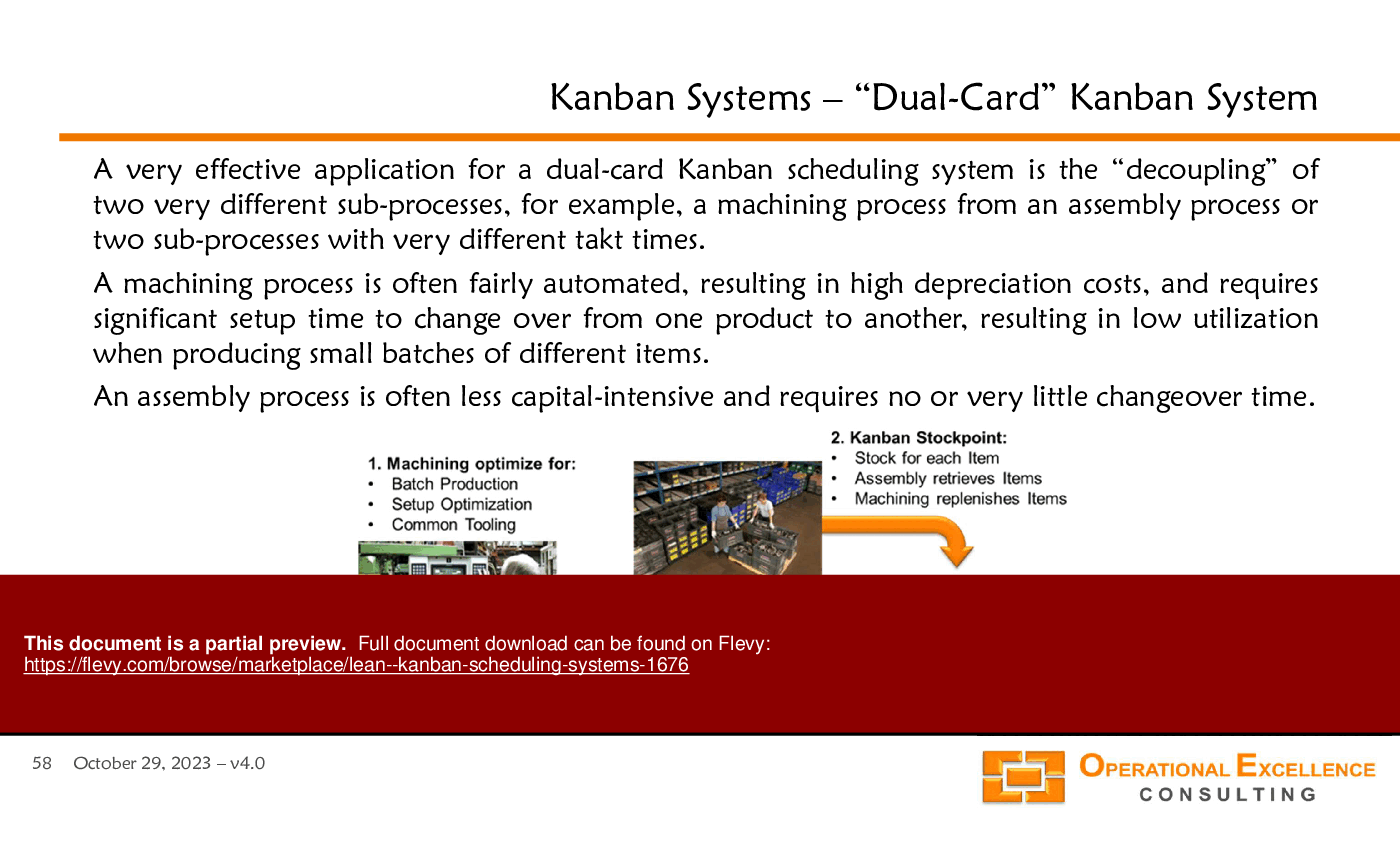
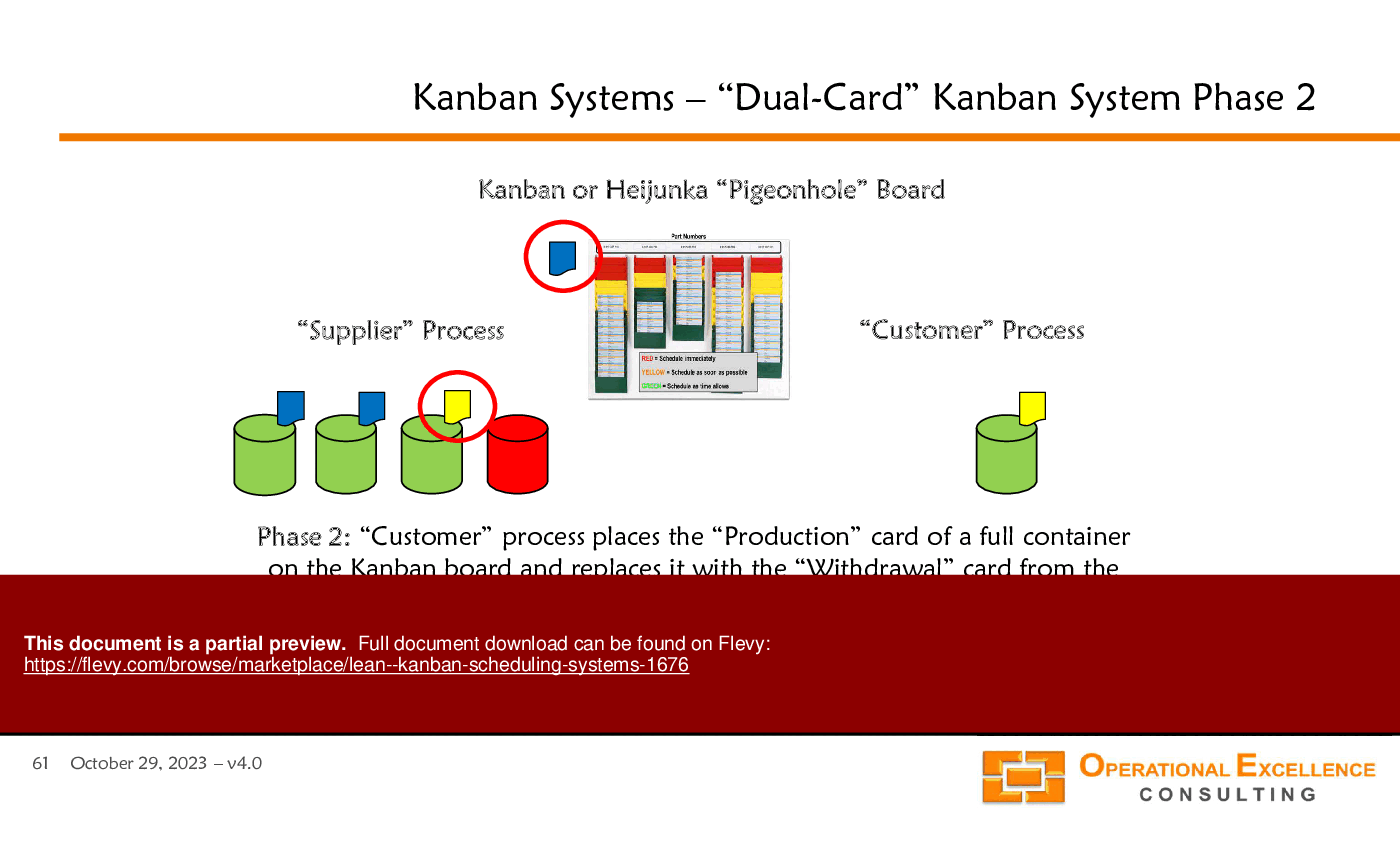
The "Dual-Card" Kanban system is a workflow and inventory management method comprising 4 phases that illustrate the interaction between "Customer" and "Supplier" processes. In Phase 1, the customer moves an empty container with a "Withdrawal" card to signal replenishment. Phase 2 involves placing a "Production" card on the Kanban board to request a full container, which the supplier provides, ensuring supply continuity. In Phase 3, the customer uses the "Withdrawal" card again to signal receipt of the full container. Finally, Phase 4 sees the supplier produce new items and attach the "Production" card to the full container, completing the cycle. This system enhances operational efficiency, fosters a responsive supply chain, reduces waste, and improves productivity, making it essential for organizations implementing Lean methodologies.
This PPT slide presents a Kanban system, specifically a Kanban or Heijunka board, used for managing production processes through visual scheduling. The board categorizes part numbers into 3 color-coded statuses: red for immediate action, yellow for scheduling as soon as possible, and green for scheduling as time permits. The left side illustrates a scenario with empty containers at the supplier, but sufficient inventory at the customer, allowing flexible production responses. Conversely, the right side depicts a critical situation with empty containers at the supplier and insufficient inventory at the customer, necessitating immediate production to avoid supply chain disruptions. This system enhances operational efficiency and aligns production with actual demand.
Kaizen, a key concept in Lean Management, emphasizes continuous, incremental improvements. The term combines "Kai," meaning to take apart and put back together, and "Zen," reflecting on the process. Kaizen events should ideally last 3 to 5 days, focusing on quick wins. Practical applications include reducing equipment setup time, enhancing order management, and minimizing motion waste, demonstrating Kaizen's effectiveness in driving efficiency. There are 2 types of Kaizen: "Point Kaizen," targeting specific tasks, and "Process Kaizen," addressing broader processes. John A. Young, CEO of Hewlett Packard, stated, "Kaizen is the opposite of complacency," highlighting the necessity of continuous improvement for competitiveness and operational excellence. This framework offers actionable insights for organizations aiming to enhance operational efficiency.
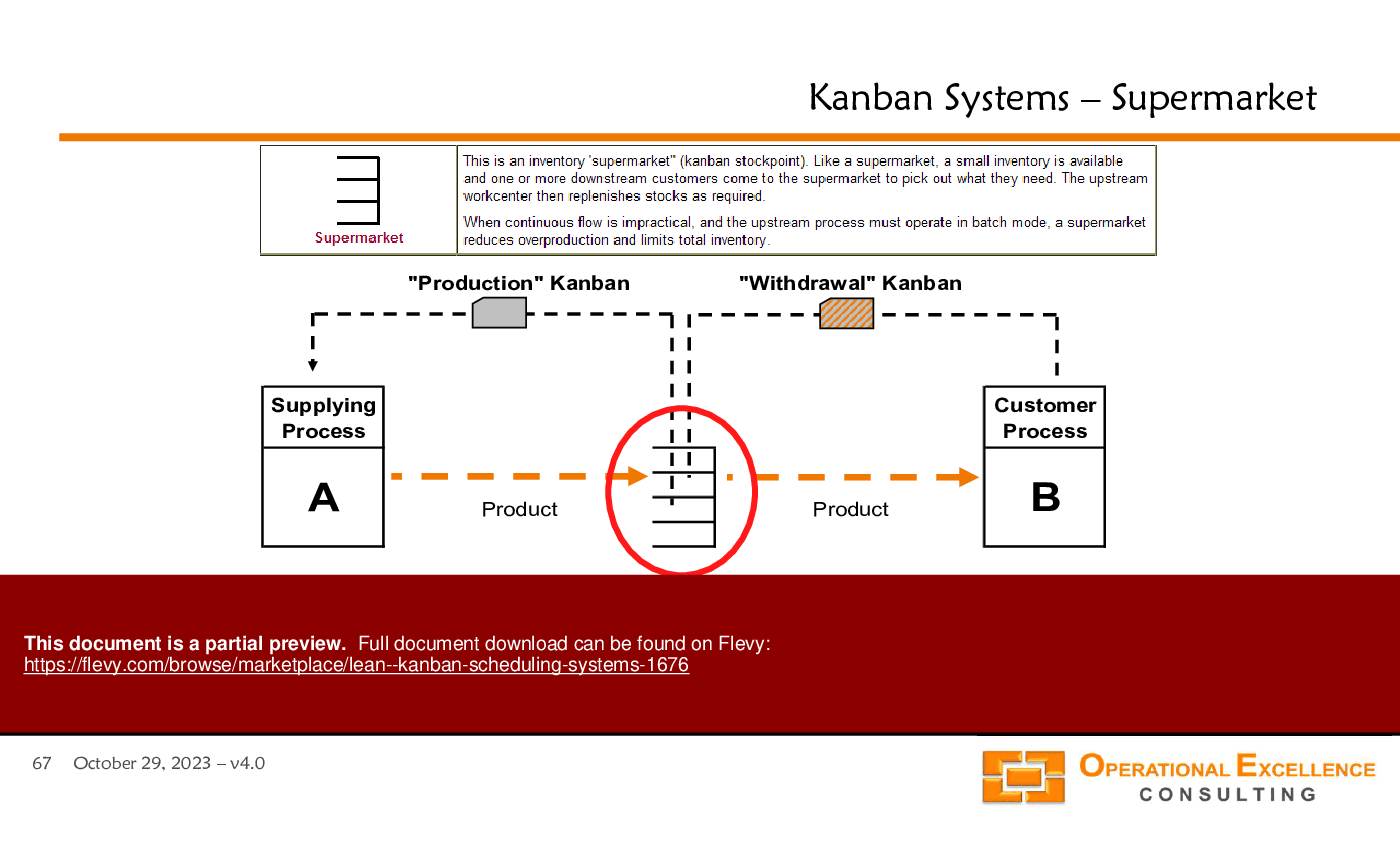
This PPT slide illustrates the Kanban system, focusing on the "Supermarket" concept in inventory management. The model shows how a small inventory serves as a stockpoint, enabling downstream customers to withdraw products without disrupting upstream processes. It highlights 2 key processes: the "Production" Kanban and the "Withdrawal" Kanban, which collaboratively manage inventory flow. The "Customer Process" interacts directly with the Supermarket, allowing customers to withdraw products as needed. Process A replenishes the Supermarket, ensuring a continuous supply while accommodating batch production. This system regulates production without strict scheduling, enhancing inventory control and minimizing overproduction risk, ultimately fostering a responsive supply chain aligned with actual demand. The Kanban Supermarket model enhances operational efficiency and improves responsiveness to customer needs.
This PPT slide outlines a structured approach to conducting Kaizen events over 5 days to improve work processes.
Phase 1 involves a team briefing covering the project charter, business impact, current challenges, and existing standard procedures to align participants on objectives.
Phase 2 focuses on project-specific training, measuring and analyzing current work processes, identifying weaknesses, and formulating improvement plans to establish a baseline.
Phase 3 entails simulating and finalizing improvements, where teams implement changes and evaluate their effectiveness in a controlled environment.
Phase 4 establishes new standard processes, embedding changes into the organization with process controls for consistency.
Phase 5 presents results, agrees on next steps, and celebrates achievements, reinforcing improvements and fostering team morale.
This structured approach drives effective change and ensures sustainable results through Kaizen events.
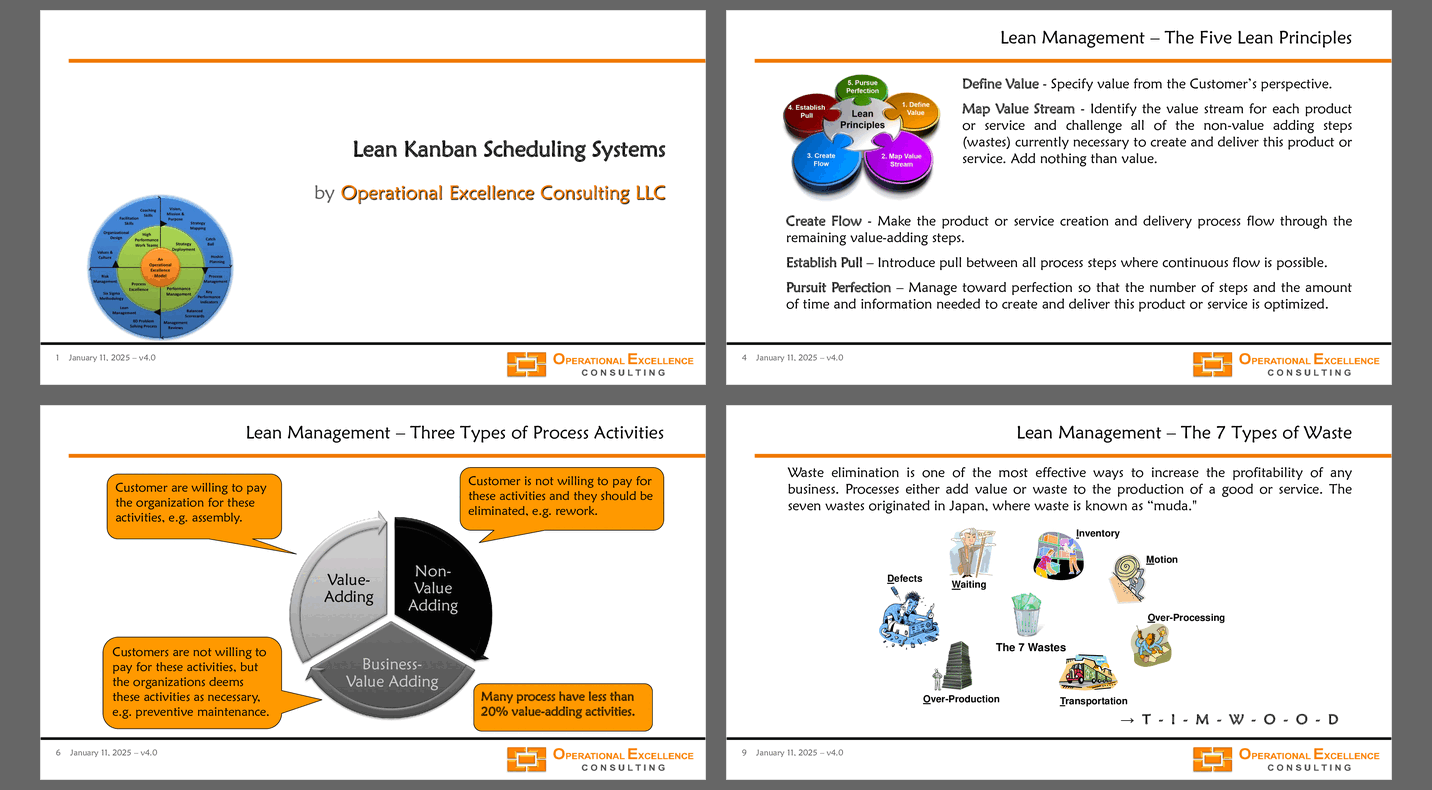
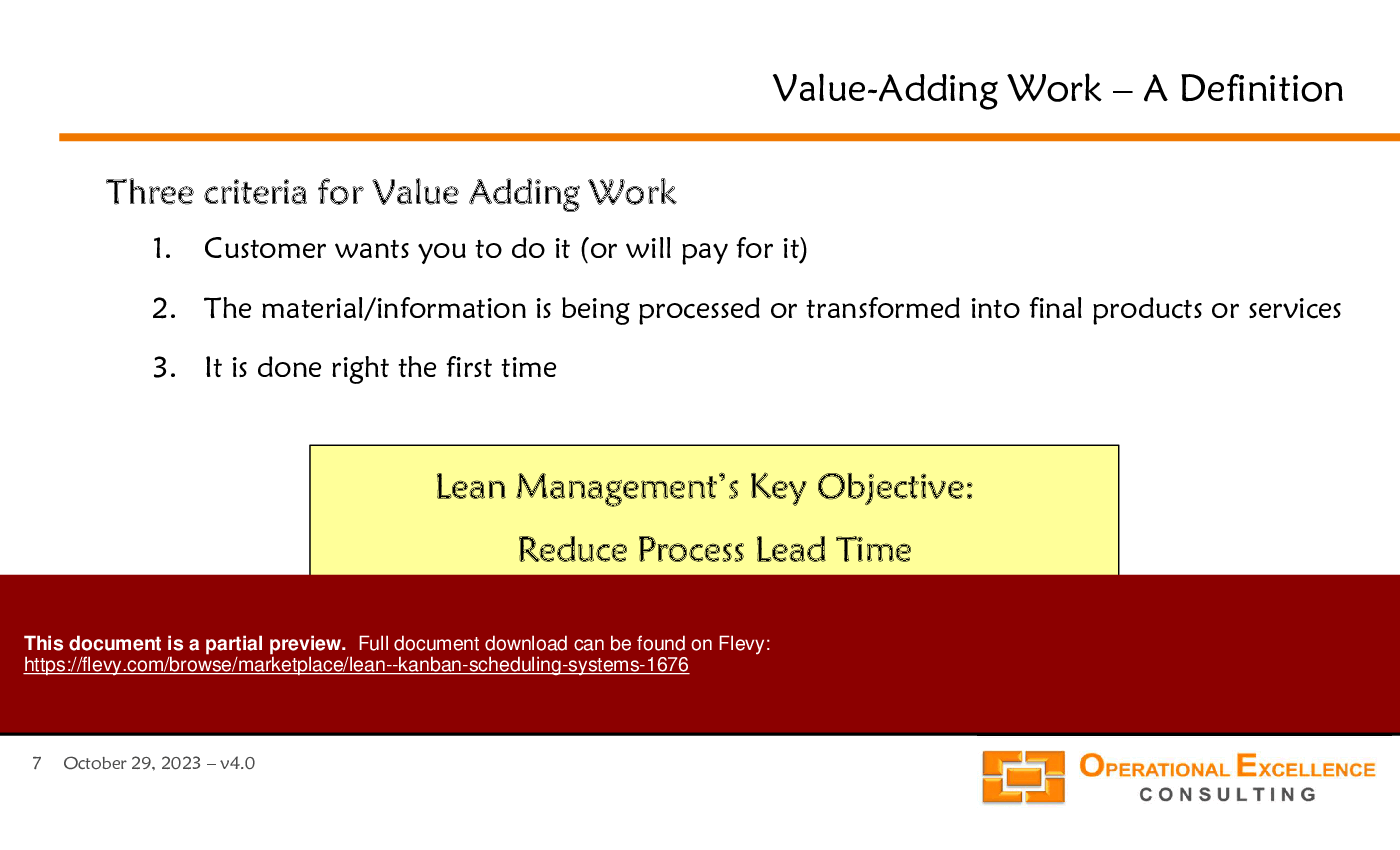
This PPT slide presents a framework for Lean Management, categorizing process activities into 3 types: Value-Adding, Non-Value Adding, and Business-Value Adding. Value-Adding activities, such as assembly, are those customers are willing to pay for, enhancing satisfaction and revenue generation. Non-Value Adding activities, like rework, are not recognized as valuable by customers and should be eliminated to improve operational efficiency. Business-Value Adding activities, such as preventive maintenance, are necessary for operational effectiveness, but may not be directly valued by customers. Notably, many processes contain less than 20% value-adding activities, highlighting the need for organizations to assess and refine processes to maximize value creation.
This PPT slide presents a framework for implementing a Personal Kanban system, focusing on 2 fundamental rules: visualizing work and limiting work in progress (WIP). The "To Do" section outlines tasks with prompts for completion time and deadlines, aiding in task prioritization. The "In Progress" section restricts active tasks to a maximum of three, preventing overcommitment and enhancing focus. The "Done" section highlights completed tasks, using criteria for success based on timeliness and quality, which serves as a performance metric. Adopting a Personal Kanban system improves efficiency in task management by visualizing work and limiting WIP, ultimately driving better outcomes.
Source: Best Practices in Kanban, Scheduling PowerPoint Slides: Lean - Kanban Scheduling Systems PowerPoint (PPTX) Presentation Slide Deck, Operational Excellence Consulting LLC
Developed by a Senior Executive and Operational Excellence Coach with experience at organizations including NOKIA, MICROVENTION, and MAGELLAN, this presentation provides a step-by-step approach to implementing Lean Kanban Systems.
Operational Excellence Consulting LLC provides assessments, training solutions, kaizen event facilitation, and implementation support to enable our clients to achieve superior performance through Operational Excellence - Strategy Deployment & Hoshin Planning, Performance Management & Balanced Scorecards, Process Excellence & Lean Six Sigma, and High
... [read more] Performance Work Teams.
Frank Adler co-founded OEC LLC in 2009 to follow his passion for Operational Excellence and to be able to work with individuals and organizations that share this passion.
He is an accomplished and recognized Operational Excellence, Lean Management, and Six Sigma coach, with over 20 years of domestic and international executive leadership experience in General Management, multi-site Operations & Supply Chain Management, and Quality & Customer Support Management.
Frank is a certified and experienced Lean Six Sigma Master Black Belt with a proven track record of implementing these methods, concepts, and tools in various organizations and industries.
He holds a Master of Science in Mathematics & Physics from the Freie University of Berlin (Germany) and a Doctor of Philosophy in Applied Mathematics & Industrial Economics from the Helsinki University of Technology (Finland).
Since 2012, we have provided business templates to over 10,000 businesses and organizations of all sizes, from startups and small businesses to the Fortune 100, in over 130 countries.
"If you are looking for great resources to save time with your business presentations, Flevy is truly a value-added resource. Flevy has done all the work for you and we will continue to utilize Flevy as a source to extract up-to-date information and data for our virtual and onsite presentations!"
– Debbi Saffo, President at The NiKhar Group
"The wide selection of frameworks is very useful to me as an independent consultant. In fact, it rivals what I had at my disposal at Big 4 Consulting firms in terms of efficacy and organization."
– Julia T., Consulting Firm Owner (Former Manager at Deloitte and Capgemini)
"FlevyPro has been a brilliant resource for me, as an independent growth consultant, to access a vast knowledge bank of presentations to support my work with clients. In terms of RoI, the value I received from the very first presentation I downloaded paid for my subscription many times over! The
quality of the decks available allows me to punch way above my weight – it's like having the resources of a Big 4 consultancy at your fingertips at a microscopic fraction of the overhead.
"
– Roderick Cameron, Founding Partner at SGFE Ltd
"I have used Flevy services for a number of years and have never, ever been disappointed. As a matter of fact, David and his team continue, time after time, to impress me with their willingness to assist and in the real sense of the word. I have concluded in fact
that it is not at all just a repository of documents/resources but, in the way that David and his team manage the firm, it is like dealing with consultants always ready to assist, advise and direct you to what you really need, and they always get it right.
I am an international hospitality accomplished senior executive who has worked and lived during the past 35 years in 23 countries in 5 continents and I can humbly say that I know what customer service is, trust me.
Aside from the great and professional service that Flevy's team provide, their wide variety of material is of utmost great quality, professionally put together and most current.
Well done Flevy, keep up the great work and I look forward to continue working with you in the future and to recommend you to a variety of colleagues around the world.
"
– Roberto Pelliccia, Senior Executive in International Hospitality
"[Flevy] produces some great work that has been/continues to be of immense help not only to myself, but as I seek to provide professional services to my clients, it gives me a large "tool box" of resources that are critical to provide them with the quality of service and outcomes they are expecting."
– Royston Knowles, Executive with 50+ Years of Board Level Experience
"As a consultant requiring up to date and professional material that will be of value and use to my clients, I find Flevy a very reliable resource.
The variety and quality of material available through Flevy offers a very useful and commanding source for information. Using Flevy saves me time, enhances my expertise and ends up being a good decision."
– Dennis Gershowitz, Principal at DG Associates
"FlevyPro provides business frameworks from many of the global giants in management consulting that allow you to provide best in class solutions for your clients."
– David Harris, Managing Director at Futures Strategy
"Flevy is now a part of my business routine. I visit Flevy at least 3 times each month.
Flevy has become my preferred learning source, because what it provides is practical, current, and useful in this era where the business world is being rewritten.
many challenges and there is the need to make the right decisions in a short time, with so much scattered information, we are fortunate to have Flevy. Flevy investigates, selects, and puts at our disposal the best of the best to help us be successful in our work.
"
– Omar Hernán Montes Parra, CEO at Quantum SFE
Save with Bundles
This document is available as part of the following discounted bundle(s):
Receive our FREE presentation on Operational Excellence
This 50-slide presentation provides a high-level introduction to the 4 Building Blocks of Operational Excellence. Achieving OpEx requires the implementation of a Business Execution System that integrates these 4 building blocks.
Receive our FREE presentation on Operational Excellence
Get Our FREE Product.
This 50-slide presentation provides a high-level introduction to the 4 Building Blocks of Operational Excellence. Achieving OpEx requires the implementation of a Business Execution System that integrates these 4 building blocks.